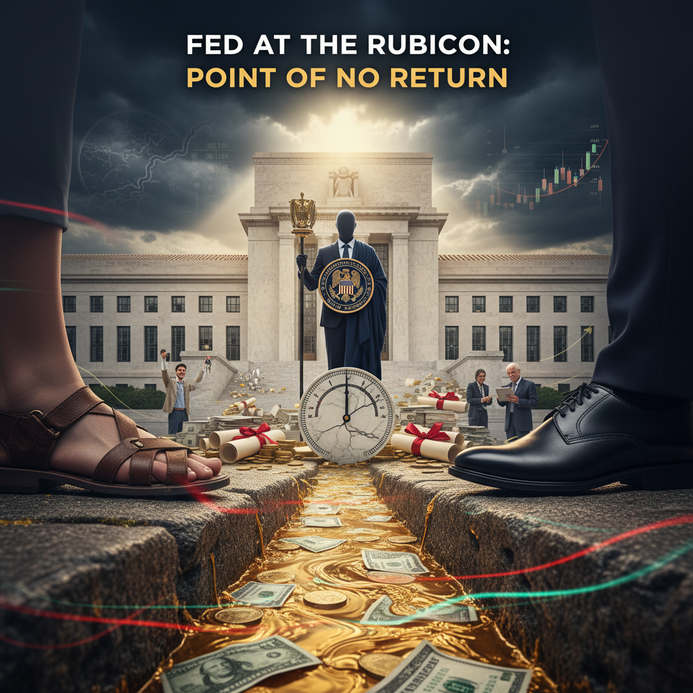
What is RUBICON? – A Turning Point for the FED
When it comes to economic strategy, the phrase “crossing the Rubicon” holds significant weight for the Federal Reserve (FED). Drawing from ancient history, when Julius Caesar initiated a civil war by crossing the Rubicon River, the term now symbolizes a point of no return. But, what does this mean for the FED and the economy?
The Historical Context of Rubicon
The phrase “crossing the Rubicon” originates from 49 BC when Julius Caesar made a bold decision to cross the Rubicon River, triggering the Roman Civil War. This act marked the end of the Roman Republic and paved the way for the Roman Empire. In a similar vein, when the FED crosses the Rubicon, it signifies making decisions with monumental and irreversible consequences.
- Historical Meaning: The end of the Roman Republic, beginning of the Roman Empire.
- Symbolism: A fateful, irreversible decision with massive repercussions.
What Does Crossing the Rubicon Mean for the FED?
For the FED, crossing the Rubicon refers to an irrevocable policy decision that can usher in a new era of monetary policy. Such actions can be compared to fiscal measures that change the game’s rules, impact interest rates, and influence inflation rates.
- Monetary Policy Impact: The decision could signal a fundamental shift in policy approach.
- Economic Growth: Potential to accelerate or decelerate economic growth.
- Significant Consequences: Such decisions may alter currency stability and international trade.
The Economic Repercussions
The potential ramifications on financial markets could be profound. A shift in interest rates may directly impact investments and consumer behavior. A decision of this magnitude could lead to changes in loan availability, affecting housing markets and consumer spending.
- Interest Rates: A shift in rates could affect savings and loans.
- Inflation Risks: Potential impact on purchasing power and cost of living.
- Financial Markets: Could lead to heightened market volatility.
- Impact on Lives: Homebuyers and businesses may either benefit or face challenges based on the FED’s decision.
Impact on People
Individuals may find themselves directly influenced by these monetary policies. With potential changes in savings interest rates and loan accessibility, everyday life situations like purchasing a home or financing education could become considerably more challenging or feasible.
Conclusion
In conclusion, the concept of the FED crossing the Rubicon signifies an event with potential transformative effects on the economy. Similar to Caesar’s historical crossing, this involves a landmark decision with significant, long-term prospects. Stakeholders must prepare for the implications, ready to adapt to the domino effects set in motion.
| Theme | What’s Happening | Why It Matters |
|---|---|---|
| Historical Context | Symbolic point of no return, originating from ancient Rome. | Highlights decisions with irreversible consequences. |
| FED’s Role | Potential shift in monetary policy decisions by the FED. | Marks a new era in economic strategy. |
| Economic Impact | Changes in interest rates, inflation, and financial markets. | Significant impact on personal finance, investments, and loans. |