US Trade Pacts with Asia: The ‘Poison Pill’ Strategy Against China
As the US strengthens its economic ties in Asia, it introduces “poison pill” clauses in trade agreements, primarily targeting China’s influence. Here’s a detailed analysis of these clauses, the countries involved, and the implications of such a strategy.
The Basics of ‘Poison Pills’ in Trade Agreements
Poison Pills Defined
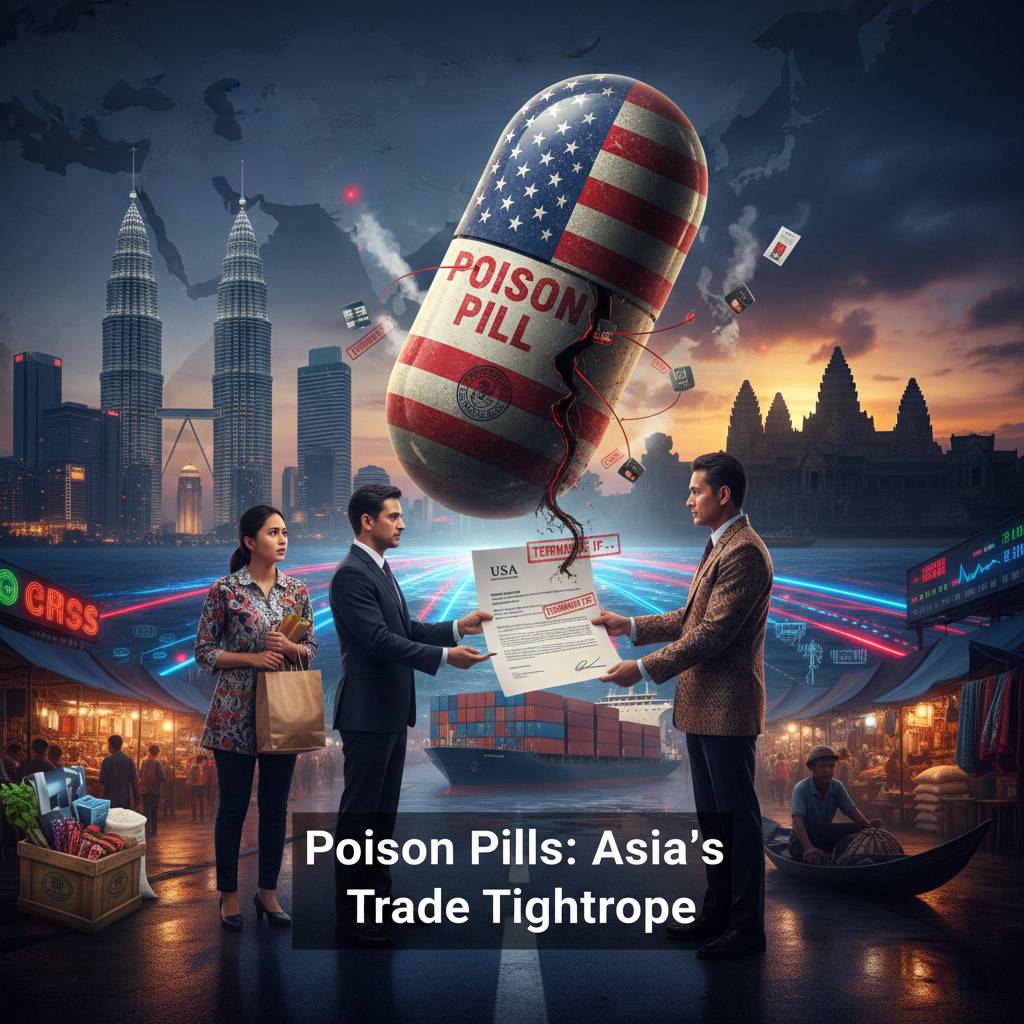
– These are clauses in US trade agreements that could terminate the pact if a partner signs a free trade deal with a “non-market economy,” implicitly China.
Historical Use
– First seen in the USMCA, now applied in Asian trade pacts.
Objective
– To prevent Asia’s economic alignment with China, keeping them within the US economic sphere.
Impact on People’s Lives
– Potential increase in consumer costs if countries shift away from cheaper Chinese goods.
Asian Countries Affected by the ‘Poison Pill’
Targeted Nations
– Malaysia and Cambodia: Both have trade agreements with the US containing ‘poison pills.’
Economic Tightrope
– These countries face the challenge of balancing ties with both the US and China.
Impact on ASEAN Neutrality
– Pressure could compromise the Association of Southeast Asian Nations’ (ASEAN) neutral stance.
Effect on People
– Populations might experience economic strain as their governments navigate diplomatic tensions.
How This Strategy Fits into the US’s Larger Plan
US’s Indo-Pacific Strategy
– Aims to economically isolate China while solidifying a US-aligned regional bloc.
Technological Containment
– The US also restricts China’s access to tech resources, slowing its economic advancements.
Economic Diplomacy
– Employs trade as a tool to influence allies’ foreign policies, echoing past US administrations’ approaches.
Economic Impact on Citizens
– Potential changes in job markets and availability of consumer goods.
Evaluating the Effectiveness and Risks of ‘Poison Pills’
Pros and Cons
– Potential to contain China’s influence, but may risk alienating smaller nations.
Possible Backfire
– Could push countries closer to China if perceived as US overreach.
Long-term Outlook
– Global trade dynamics might shift, affecting international relations and economic ecosystems.
Social Implications
– Could lead to national debates on foreign dependency and local economic policies.
China’s Possible Countermeasures
China’s Stance
– China may retaliate through diplomatic channels or by strengthening ties with non-US allies.
Economic Responses
– Could involve boosting investments in countries without ‘poison pill’ constraints.
Trade Wars Possible
– An escalation might ensue, affecting international markets and global trade stability.
Public Sentiment
– Heightened nationalistic sentiments could arise, affecting domestic and international politics.
Conclusion
The US’s use of ‘poison pills’ in Asia trade pacts is a strategic move to curb China’s growing economic influence. While it strengthens US ties, it places countries like Malaysia and Cambodia in challenging positions. Future relations and economic landscapes hinge on the efficacy and acceptance of these clauses globally.
TL;DR Table
| Theme | What’s Happening | Why It Matters |
|---|---|---|
| ‘Poison Pill’ Clauses | Clauses terminate agreements if partners trade with non-market economies like China. | Prevents Asia’s economic alignment with China, increasing US influence. |
| Impacted Countries | Malaysia and Cambodia are facing these clauses in US trade deals. | They must navigate between US ties and significant Chinese trade relations. |
| US Strategy | Creating a US-aligned bloc, isolating China from supply chains. | Impacts global supply chains and trade relationships. |
For more content, visit Reporter Freya.
**Focus Keyword:** Poison Pills in US Asia Trade Pacts
**Tags:** US Trade Strategies, China Economic Influence, Asia Trade Pacts