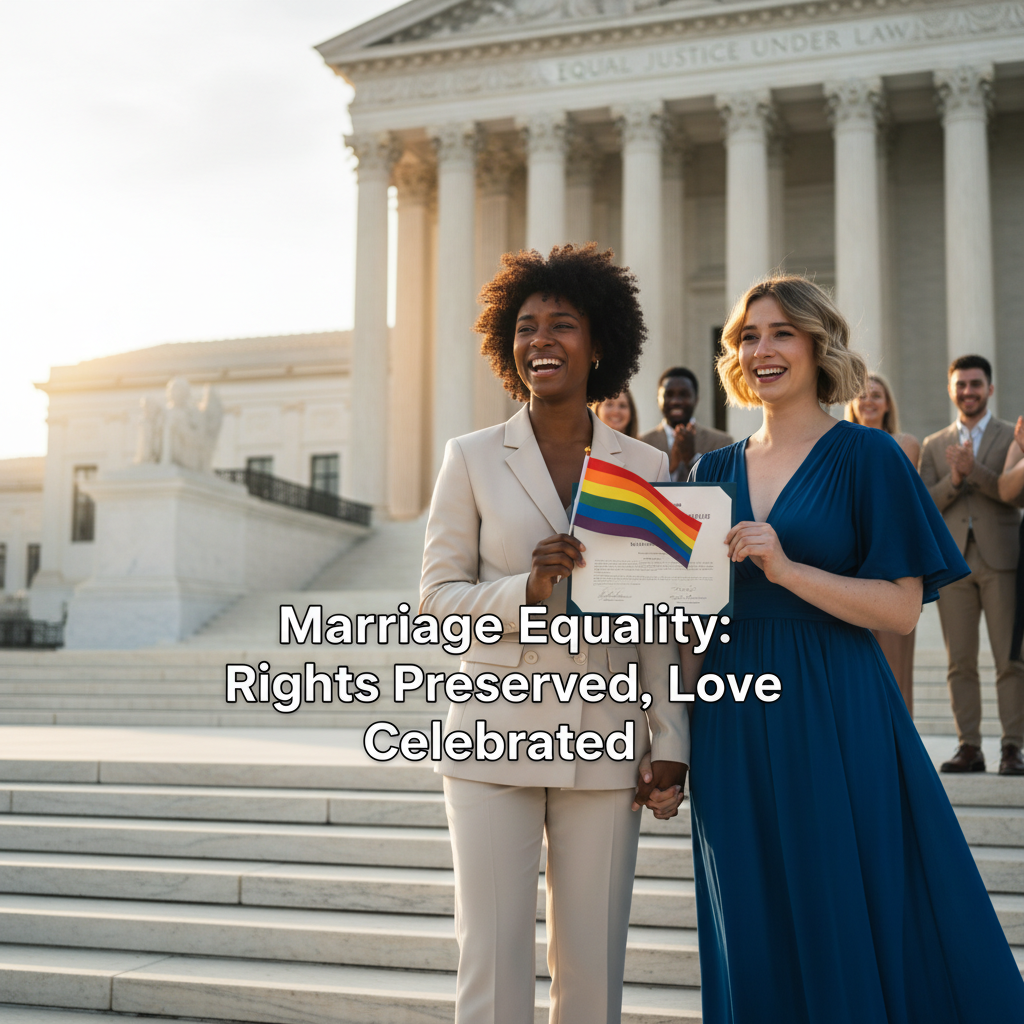
The Supreme Court Reaffirms Same-Sex Marriage Rights: A Detailed Analysis
The Supreme Court’s decision to deny an appeal challenging same-sex marriage rights has important implications for LGBTQ+ rights, religious freedoms, and legal precedents in the United States. This article delves into the case’s background, key players, and future ramifications.

Background: A Decade of Marriage Equality
The battle for marriage equality reached a pivotal moment with the Obergefell v. Hodges decision in 2015, which mandated the nationwide legalization of same-sex marriage. Despite this, the changing composition of the Supreme Court raised concerns about the future stability of this right, especially after critical rulings like Dobbs v. Jackson Women’s Health Organization.
- Landmark Decision: Obergefell v. Hodges confirmed the constitutional right to same-sex marriage in 2015.
- Changing Court Dynamics: The appointment of conservative justices increased fears over potential reversals of marriage equality.
- Impact on Lives: Same-sex couples gained equal marriage rights, profoundly affecting personal and legal recognitions nation-wide.
The Central Conflict: Kim Davis and Religious Objections
Kim Davis, a former Kentucky clerk, refused to issue marriage licenses to same-sex couples based on religious beliefs, igniting a legal battle that drew national attention. Her defiance highlighted the tension between religious objections and LGBTQ+ rights.
- Kim Davis’s Stand: Cited religious beliefs to refuse marriage licenses, sparking a legal case that lasted years.
- Legal Penalties: Davis faced financial penalties for her non-compliance, challenging the balance between religious freedom and lawful duties.
- Impact on Individuals: Her actions delayed and denied marriage rights, impacting couples’ personal lives and legal status.
The Supreme Court’s Decision: A Sigh of Relief
The Court’s refusal to hear Davis’s appeal affirms the standing precedent, providing relief to LGBTQ+ advocates who feared the destabilization of marriage rights. This decision suggests the Court’s reluctance to revoke established civil rights despite its conservative makeup.
- Preservation of Rights: Same-sex marriage remains protected under current law, maintaining stability for affected couples.
- Judicial Philosophy: Indicates a cautious approach by the conservative-majority Court towards overturning established precedents.
- Impact on Society: Reinforces confidence in legal protections for LGBTQ+ communities across the nation.
Implications and Future Outlook
This decision has broader implications, including the continued debate over religious exemptions and the importance of vigilant advocacy to safeguard equality rights.
- Legal and Social Debates: Religious freedoms versus anti-discrimination laws continue to be contentious topics.
- Advocacy’s Role: Ensures that rights remain protected and that progress towards equality isn’t undone.
- Impact on Legislative Initiatives: Drives the push for anti-discrimination laws with sufficient religious exemptions to balance societal interests.
Conclusion
The Supreme Court’s decision to uphold the standing ruling on same-sex marriage rights maintains a crucial victory for the LGBTQ+ community. This choice illustrates the delicate balance between evolving social values and established legal precedents, reaffirming that the literal rights of all Americans remain resilient in the face of ideological challenges.
TL;DR Table
- Theme: Supreme Court Decision
- What’s Happening: Court denies appeal challenging same-sex marriage
- Why It Matters: Preserves marriage equality, impacts LGBTQ+ lives positively, signals judicial approach on rights issues
For more content, visit Reporter Freya.
References
- CNN: Supreme Court declines to revisit landmark same-sex marriage…
- The New York Times: Supreme Court Denies Request to Revisit Same-Sex Marriage…
- Politico: Justices decline case seeking to overturn landmark same-sex marriage ruling
- DW: US Supreme Court rejects challenge to same-sex marriage
- Reuters: US Supreme Court rejects bid to overturn same-sex marriage right