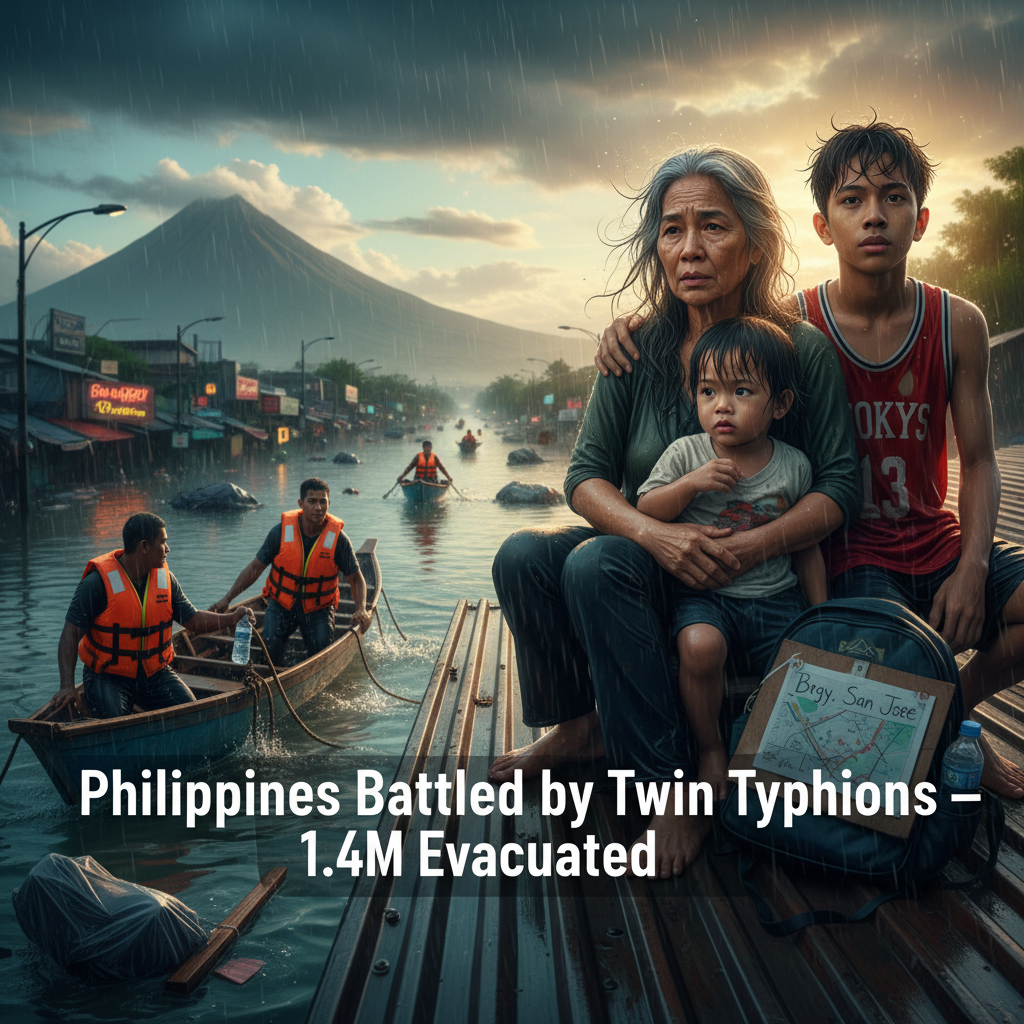
More than 1.4 Million Evacuated as Second Typhoon Slams the Philippines
In recent history, the Philippines faced the wrath of two successive typhoons: Super Typhoon Goni and Typhoon Vamco. This natural disaster resulted in the evacuation of over 1.4 million people and caused widespread devastation. Let’s delve into the details to understand the impact and aftermath of these catastrophic events.
A Devastating “One-Two Punch”: Typhoon Goni and Typhoon Vamco
The sequence of typhoons demonstrated the vulnerability of the region to extreme weather events, exacerbated by climate change. Each typhoon had distinct characteristics and consequences, leading to a compounded humanitarian crisis.
Typhoon Goni: The Unforgiving Power
- Meteorological History: Landed on November 1, 2020, as a Category 5-equivalent super typhoon.
- Winds and Damage: Sustained winds of 225 km/h with gusts up to 310 km/h; the strongest to make landfall.
- Impact on Region: Severe destruction in Bicol region; lahar flows from Mayon Volcano.
- Disruption: Disconnected Catanduanes from communication lines and infrastructure.
- Human Toll: Dozens of fatalities, leaving communities in ruin and despair.
- Impact on People: Profound loss of homes, livelihoods, and a lasting psychological burden.
Typhoon Vamco: The Deluge of Disaster
- Meteorological History: Made landfall on November 11-12, 2020, as a Category 2-equivalent typhoon.
- Primary Threat: Unprecedented rainfall leading to severe flooding.
- Flooding in Metro Manila: Worst floods in years, reminiscent of Typhoon Ketsana (2009).
- Evacuations: Forced evacuation of over 1.4 million people due to relentless floods.
- Cagayan Valley: Catastrophic flooding with residents stranded on rooftops.
- Impact on People: Extensive damage to homes and infrastructure; essential services disrupted.
The Reality of Climate Change in the Philippines
As a nation highly prone to tropical cyclones, the Philippines’ vulnerability is exacerbated by climate change. The increased intensity and frequency of such storms point to alarming environmental shifts.
Environmental and Humanitarian Challenges
- Climate Patterns: 2020 marked a particularly active year for typhoons in the Pacific.
- Governance and Preparedness: Criticisms arose regarding the management of disasters, particularly the response to dam releases and evacuations.
- Aftermath and Recovery: Efforts include both domestic initiatives and international aid, focusing on rebuilding and restoring livelihoods.
- Impact on People: Rehabilitation is a long, arduous process, affecting mental health and economic recovery.
Looking Ahead: Lessons and Resilience
The double impact of Typhoon Goni and Vamco sets a precedent for future preparedness. It underscores the need for adaptive strategies in the face of climatic adversities, aiming to minimize human suffering and economic loss.
| Theme | What’s Happening | Why It Matters |
|---|---|---|
| Impact of Typhoons | Devastating impact in quick succession | Highlighting vulnerability to natural disasters |
| Humanitarian Crisis | Over 1.4 million evacuated | Mass displacement and human suffering |
| Climate Change | Increased severity of storms | Reflects broader environmental concerns |
In conclusion, the story of these two typhoons is one of immense destruction but also one of resilience. Understanding the dynamics of these events allows us to better prepare for future challenges. Crucially, it reminds us of the urgent need to address climate change and develop adaptive strategies that preserve lives and livelihoods in vulnerable regions.