AI Unveils Anomalies in Hubble Archive: A Cosmic Revelation
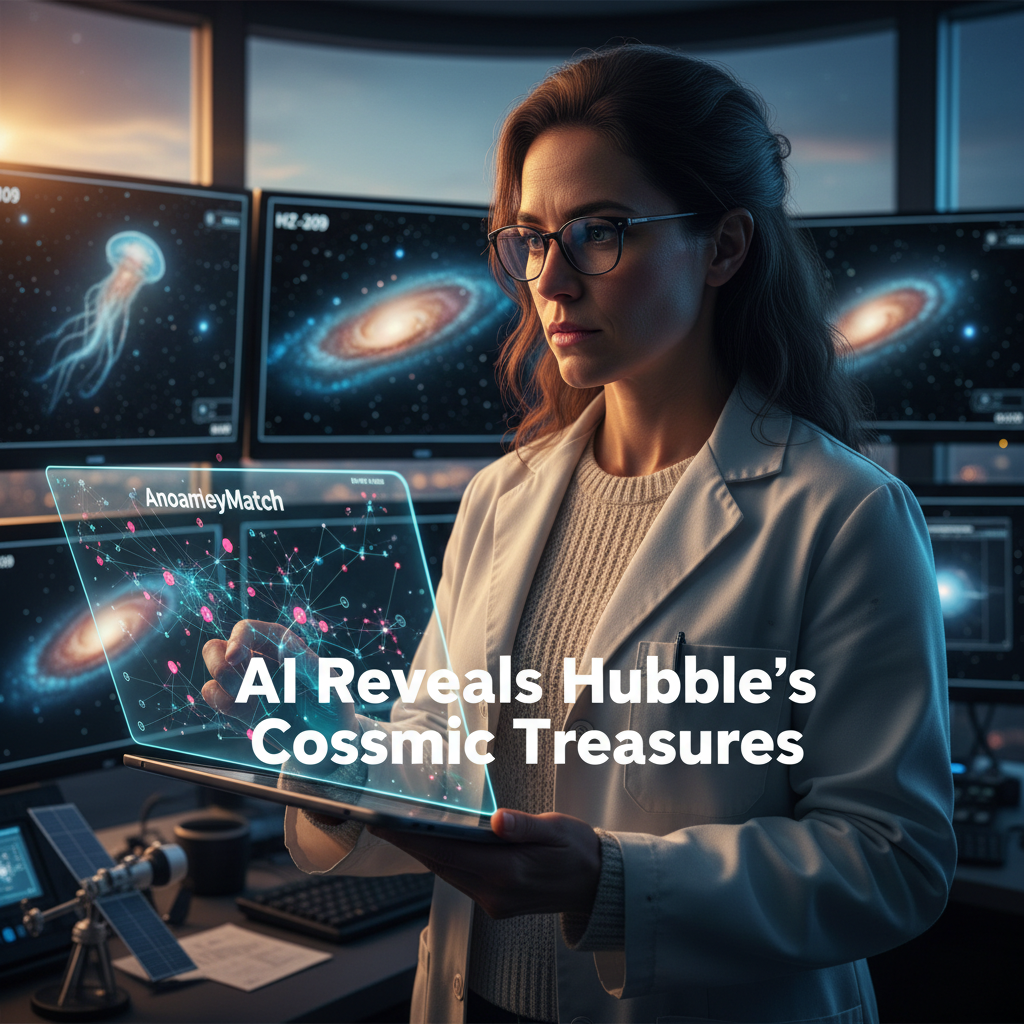
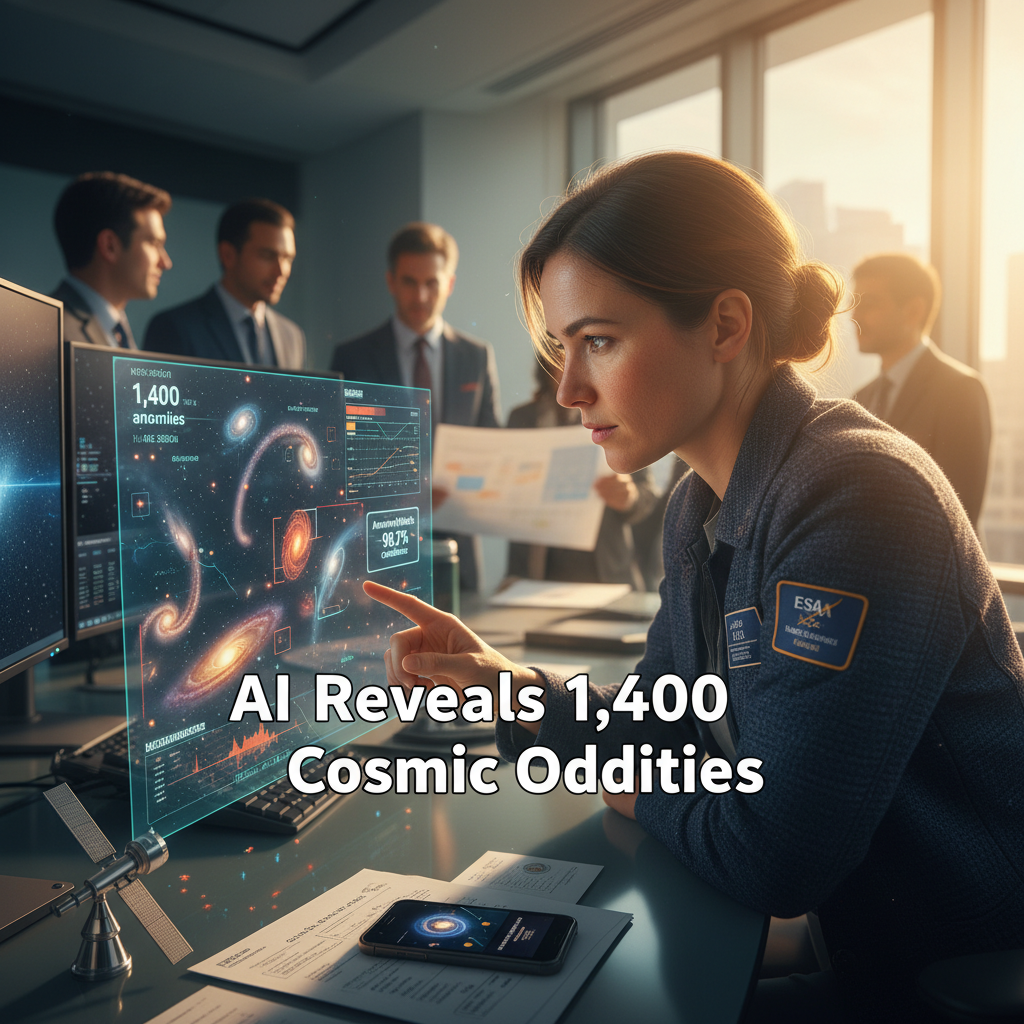
In a groundbreaking discovery, artificial intelligence has identified over 1,400 cosmic anomalies within the Hubble Space Telescope’s vast archive, marking a significant advancement in modern astronomy. This technological leap has not only unearthed hidden celestial phenomena but also signaled the dawn of AI-driven astronomical research.
Unveiling the Universe: The Power of AnomalyMatch
By 2025, the European Space Agency (ESA) and NASA collaborated on employing the AI tool, AnomalyMatch, to meticulously analyze 35 years’ worth of Hubble imagery. This collaboration has shifted the landscape of space exploration capabilities.
- Efficient Data Analysis: With over 99 million images in Hubble’s archives, traditional analysis would span decades. AI accomplished an initial scan in just 2.5 days, expediting data processing by leaps and bounds.
- Innovative Algorithm: Employing contrastive learning and dual neural networks, the AI identifies anomalies by comparing known astronomical features with unfamiliar deviations.
- High Accuracy Levels: Each anomaly undergoes expert review, ensuring a misreport rate well below 0.2%, thereby surpassing traditional methods.
- Impact on Science: This approach enhances human capacity to uncover otherwise invisible cosmic events, effectively rewriting astronomy’s rules.
Cosmic Discoveries: A New Frontier
With AI’s assistance, scientists categorized a diverse range of anomalies that have challenged existing astronomical theories and models.
- Galactic Mergers: Representing 42% of anomalies, these ‘jellyfish galaxies’ offer insights into galaxy evolution.
- Gravitational Lenses: Comprising 18%, these systems provide valuable data on dark matter distribution.
- Unclassified Phenomena: Nearly 31% remain enigmatic, suggesting potential new physical laws.
- Notable Discoveries: Includes systems like HSO-2026A and GLA-2026B which challenge current models on galaxy interaction and dark matter behavior.
Transforming Astronomical Paradigms
AI doesn’t replace humans but augments our ability to perceive cosmic wonders. It shifts our understanding through increased efficiency and depth.
- Efficiency Boost: AI processes images 4,000 times faster than manual efforts, dramatically increasing former data usage rates.
- Expert Opinions: Thought leaders like Pablo Gómez and Sarah Gallagher emphasize AI’s role in expanding human perceptual boundaries.
- Challenges: Some question the implication of unexplained phenomena and whether AI redefines existing theoretical frameworks.
Charting Future Courses in AI Astronomy
Envisioning the next decade, AI’s role in space exploration continues to grow, promising even greater discoveries and deeper cosmic insights.
- Technological Integration: Future projects include deploying AI systems like AnomalyMatch to data from the James Webb and Euclid Telescopes for real-time anomaly detection.
- Advanced Scientific Objectives: AI assists in unveiling dark matter irregularities and characterizing exoplanet atmospheres.
- Public Engagement: Platforms like Hubble-Anomaly Zoo will invite citizen scientists to contribute to AI-driven categorization efforts, democratizing space exploration.
Conclusion: AI’s Role in Unveiling Universal Secrets
The integration of AI within astronomical research signifies a monumental shift towards deeper cosmic understanding. As AI continues to unveil uncharted celestial phenomena, it not only aids in scientific discovery but also serves as a catalyst for re-examining humanity’s place within the vast expanse of the universe.
| Theme | What’s Happening | Why It Matters |
|---|---|---|
| AI in Astronomy | 1,400 anomalies discovered in Hubble’s archives through AI. | Revolutionizes speed and accuracy of cosmic discovery. |
| Cosmic Discoveries | New types of celestial phenomena identified by AI. | Challenges and expands existing astrophysical theories. |
| Future of AI Astronomy | AI tools expanding to more telescopic data sources. | Enhances exploration potential and public participation. |
For more details, explore related content on Reporter Freya.