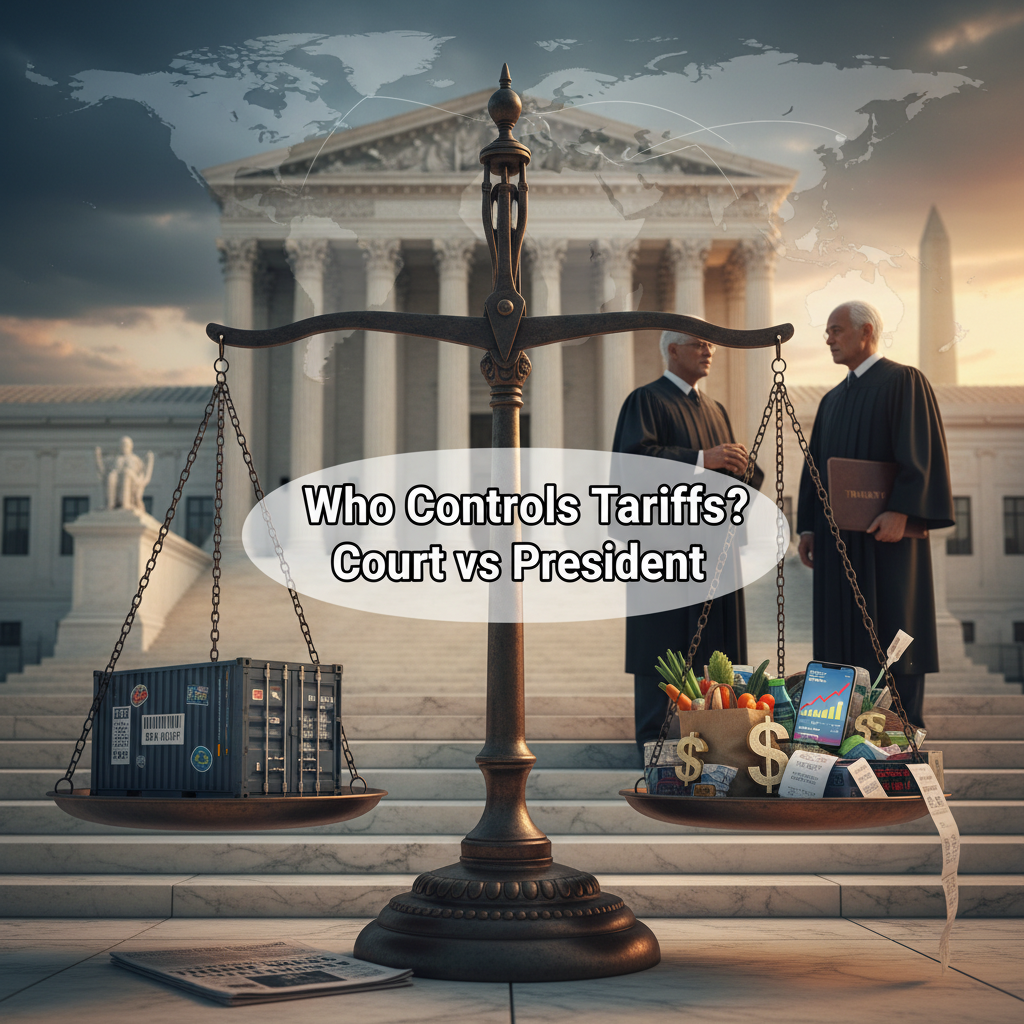
US Supreme Court vs US President: Legal Debates on US Tariffs
The ongoing legal tussle between the US Supreme Court and the President over US Tariffs touches on crucial constitutional aspects of trade policy. These arguments, for and against the tariffs, carry significant implications for trade, foreign policy, and the balance of power within the federal government.
Understanding Presidential Authority on US Tariffs
The US President’s authority to impose tariffs is frequently questioned. In defense of such action, several legal arguments are made:
- National Security Justification: Using Section 232 of the Trade Expansion Act of 1962, the administration argues that tariffs are essential to protect domestic industries vital for national security.
- Tool for Foreign Policy: Tariffs serve as an economic lever to negotiate better trade deals and press other countries to amend their allegedly inequitable trade practices.
- International Emergency Economic Powers: Under the IEEPA, the President can manage international commerce when threats to national interests are perceived.
- Impact on Consumers and Revenue Collection: Though the enforcement of tariffs leads to price hikes for consumers, the administration views tariff revenue as a secondary benefit, highlighting their primary objective of protecting national interests.
Challenges Against Presidential Tariff Imposition
The counterargument to presidentially imposed tariffs outlines fundamental legal concerns:
- Commerce Power Held by Congress: Challengers assert that under Article I, Section 8, Congress holds the sole authority to impose tariffs, questioning the President’s unilateral action.
- IEEPA Misuse: Critics claim the President’s use of the IEEPA for routine trade disputes deviates from its intended purpose to manage genuine emergencies.
- Problems with Nondelegation Doctrine: There’s a legal contention that allowing broad executive tariff authority effectively weakens Congress’s powers.
- Tariffs as Burdensome Taxes: The imposition of tariffs is seen as disproportionately burdening consumers and small businesses, contradicting constitutional tax regulation.
The Supreme Court’s Role and Implications
The US Supreme Court is actively examining these pivotal arguments:
- Skepticism of Executive Power: The Supreme Court’s inquiries often reflect apprehensions regarding expansive presidential powers regarding trade.
- Impact of the Ruling: The decision holds profound effects not only for government power distribution but also on international relations and trade policies.
- Impact on Americans: At the core of the debate is the effect on American consumers, who face higher prices due to tariff-induced market changes.
For further insights, consider reviewing analyses from reputable sources like PBS NewsHour.
Conclusion
The debate over US tariffs encapsulates fundamental legal and constitutional questions. While presidential defenders argue for the necessity of tariffs for national security, critics highlight the potential overreach and consumer impact. As the Supreme Court weighs in, the future of US trade policy and the authority balance between branches of government remain in the balance.
| Theme | What’s Happening | Why It Matters |
|---|---|---|
| Presidential Powers | President imposing tariffs under various acts | Potential expansion or restriction of executive trade authority |
| Supreme Court Proceedings | Challenges to presidentially-imposed tariffs | Impacts constitutional interpretations and trade policy |
| Impact on Consumers | Increased prices due to tariffs | Affects the US economy and everyday consumers |
Tags: US Tariffs, Supreme Court, Presidential Authority, Trade Policy, US Congress
For more content visit Reporter Freya.