Introduction
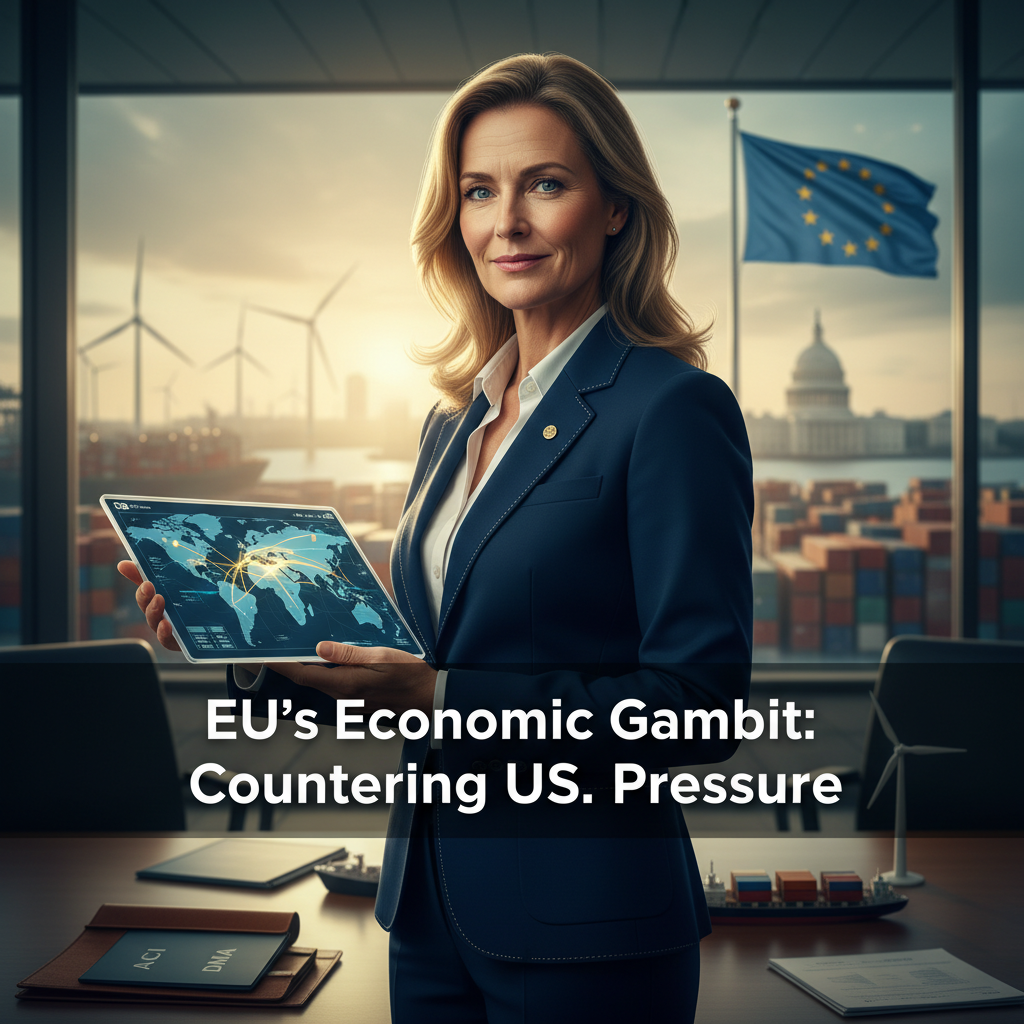
Amid persistent trade tensions with a “Trump 2.0” administration, European leaders are strategizing to bolster their stance against perceptions of vulnerability. This article explores actionable measures the EU can leverage to reaffirm its economic strength vis-à-vis the U.S., based on the 2024–2026 geopolitical landscape.
Trade Countermeasures: Leveraging Economic Tools
The Anti-Coercion Instrument (ACI) emerges as a critical tool for Europe to counteract U.S. economic pressures. By imposing reciprocal tariffs on American products, the EU could restrict U.S. access to public procurement markets worth $3.3 trillion, seriously impacting U.S. exporters and potentially costing them over $60 billion annually. Implementing digital regulations, such as the Digital Markets Act (DMA) and Digital Services Act (DSA), allows Europe to exert substantial control over U.S. tech giants, mandating costly compliance and data localization, which could collectively cost these companies up to $20 billion by 2026.
- Impact on People: Higher tariffs may lead to increased prices for consumers.
- Impact on Businesses: U.S. tech firms will face significant compliance costs.
For more on the ACI, visit France 24.
Regulatory Power: The “Brussels Effect”
Europe’s regulatory prowess, often referred to as the “Brussels Effect,” positions it as a global standard-setter, compelling multinational entities to comply globally with EU regulations. Recent implementation of the AI Act exemplifies this dynamic, forcing U.S. firms to redesign products to meet ethical AI standards. By extending similar regulations to emergent sectors like green technology, Europe can continue to influence global market practices and standards.
- Global Influence: 78% of U.S. firms comply with EU standards to maintain market access.
- Economic Stability: EU standards ensure market stability and protect consumer interests worldwide.
Learn more about regulatory standards with Oxford Law Blogs.
Energy and Investment Leverage
Given the EU’s commitment to substantial U.S. energy purchases (amounting to $750 billion by 2028), the ability to suspend these agreements stands out as a potent bargaining chip. Reallocating these funds to sources in Africa or the Middle East could deprive the U.S. energy sector of over $150 billion in revenue. Similarly, by retracing planned investments, especially in politically sensitive states like Ohio, the EU could exert economic pressure potentially influential in electoral outcomes.
- Impact on U.S. Economy: Potential loss of jobs, particularly in areas heavily reliant on foreign investment.
- Impact on Energy Market: Diversification of energy sources supports global energy stability.
Explore potential outcomes of energy negotiations at the White House Fact Sheet.
Diplomatic and Geopolitical Moves
Strategically enhancing alliances offers the EU a means to counter U.S. economic influence. Forging deeper connections with regions like ASEAN, and partnering with China on climate technology can create a more balanced and diversified global economic landscape. The EU’s success in WTO litigation further highlights its capacity to counteract U.S. tariff policies through established international trade mechanisms.
- Global Trade Dynamics: Strengthened alliances diversify trade dependencies.
- Political Leverage: WTO victories bolster the EU’s negotiating position on the global stage.
Read more about recent diplomatic strategies on CAP Reform.
Conclusion: Strategic Resilience and Projected Strength
By implementing comprehensive trade measures, utilizing regulatory leverage, and fostering strategic alliances, the EU showcases its ability to project considerable economic power. These actions are not just reactive but proactive strategies meant to stabilize and maintain Europe’s influential position on the world stage. A robust response can effectively counter perceived vulnerabilities, reinforcing Europe’s economic sovereignty.
TL;DR Table
| Theme | What’s Happening | Why It Matters |
|---|---|---|
| Trade Countermeasures | EU deploys ACI and digital regulations | Could cost U.S. exporters and tech firms billions |
| Regulatory Power | “Brussels Effect” forces global standard compliance | Ensures market stability and influences global policies |
| Energy and Investment Leverage | EU threatens to redistribute energy funds | Potentially disrupts U.S. energy market and economy |
| Diplomatic and Geopolitical Moves | EU builds alliances and wins WTO disputes | Strengthens global position and counteracts U.S. pressure |
For more related articles, visit ReporterFreya.com.