EU Prepares €93bn Tariffs in Retaliation for Trump’s Greenland Threat
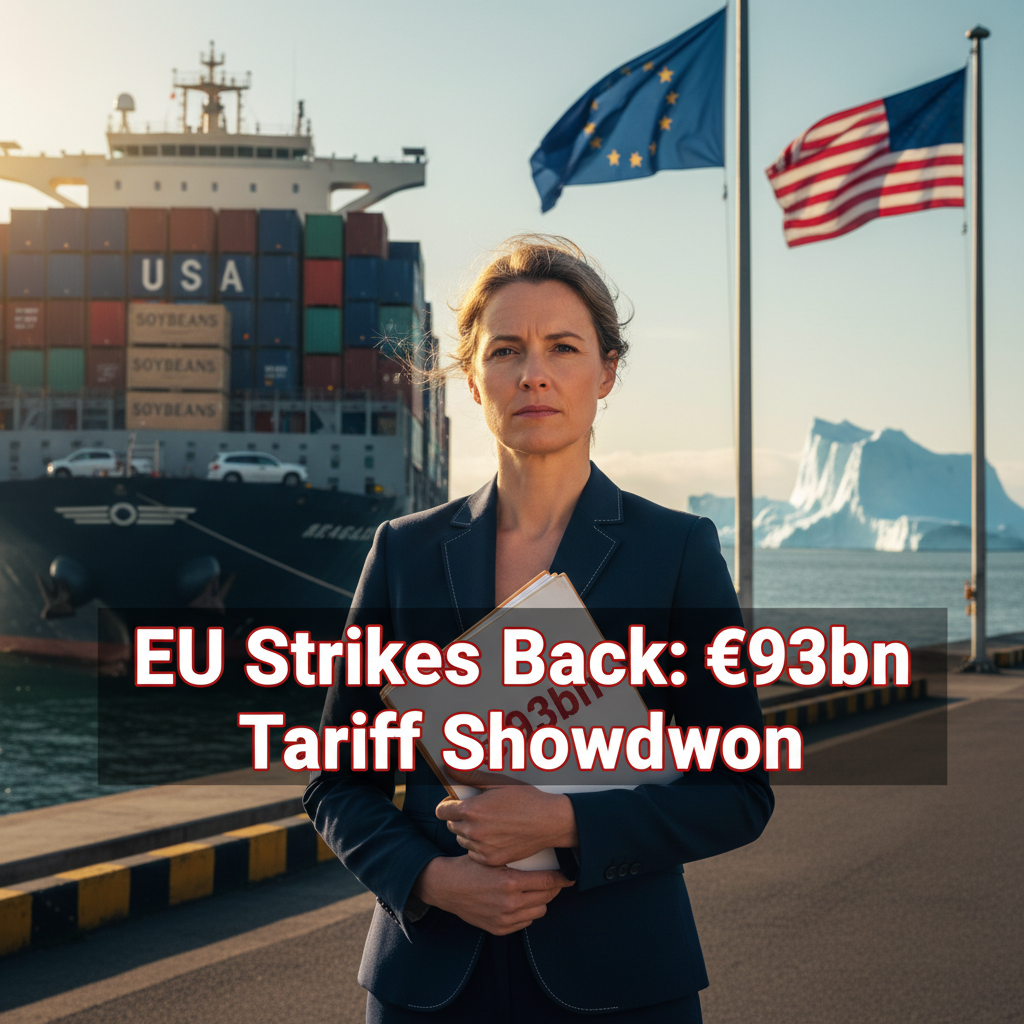
Introduction: The European Union has announced tariffs of €93 billion on U.S. imports, a retaliatory action against former U.S. President Donald Trump’s threats towards Greenland. This move signals a significant strain in EU-U.S. relations, resurfacing old trade tensions and marking a critical moment in international geopolitics.
Background: EU-U.S. Trade Relations & Greenland Sovereignty
The relationship between the EU and the United States has seen various challenges over the years, notably during Trump’s original tenure as President from 2017-2021.
- Trade Disputes: Past tariffs and aggressive trade policies set a precedent for today’s conflicts.
- Greenland’s Importance: Autonomous and resource-rich, Greenland presents strategic Arctic advantages.
- Trump’s Proposal: Attempts to acquire Greenland have been rejected, but recent threats exacerbate tensions.
- Sovereignty Concerns: Mocking remarks about Denmark’s military presence challenge NATO dynamics.
Trump’s Threat and EU’s Retaliation
Former President Trump’s latest announcement adds a new layer to an already complex geopolitical landscape.
- Trump’s Tariffs: A 10% tariff on various EU countries aims to negotiate a deal over Greenland.
- EU’s Response: Imposing a €93 billion tariff on key U.S. exports, affecting soybeans, cars, and more.
- Economic Ramifications: The tariffs threaten major industries and could lead to significant job losses.
Economic and Social Impact
The proposed tariffs will have far-reaching consequences on both sides of the Atlantic.
- On the U.S. Economy: Agriculture and automobile sectors are particularly vulnerable, with an estimated 200,000 U.S. jobs at risk.
- European Market Effects: European industries bracing for increased costs and potential supply chain disruptions.
- Global Trade Shifts: Potential realignment of commodity markets, with countries like Brazil and Canada stepping in.
- Everyday Lives: Consumers may face higher prices and limited product availability.
International Reactions and Legal Framework
The international response to the EU’s tariff announcement has been mixed and legally complex.
- EU’s Diplomatic Moves: Initially seeking dialogue but now defending its stance with justified measures.
- International Allies: Mixed reactions from global powers, with offers of support or condemnation.
- WTO Principles: The EU cites WTO Article XXI to support its tariff measures to protect vital interests.
Future Outlook and Resolution Scenarios
Looking forward, several scenarios could unfold depending on diplomatic efforts and geopolitical strategies.
- Potential Trade War: If unresolved, a full-blown trade dispute could escalate.
- Diplomatic Solutions: Mixer initiatives and mediation could pave the way for an amicable resolution.
- Greenland’s Role: Greenland may seek alternative partnerships, further complicating matters.
Conclusion: The EU’s €93 billion tariff initiative is a pivotal response to protect sovereignty and economic interests. As February 1, 2026, approaches, diplomatic negotiations will be crucial in averting further economic turmoil and maintaining stability in transatlantic relations.
TL;DR Table
| Theme | What’s Happening | Why It Matters |
|---|---|---|
| EU-U.S. Relations | €93bn tariffs proposed by EU | Significant impact on trade and diplomacy |
| Greenland Sovereignty | Trump’s renewed threats towards Greenland | Challenges EU security and sovereignty |
| Economic Impact | Potential loss in U.S. agricultural and automotive industries | Could lead to job losses and global commodity shifts |
For more detailed content, visit our site.