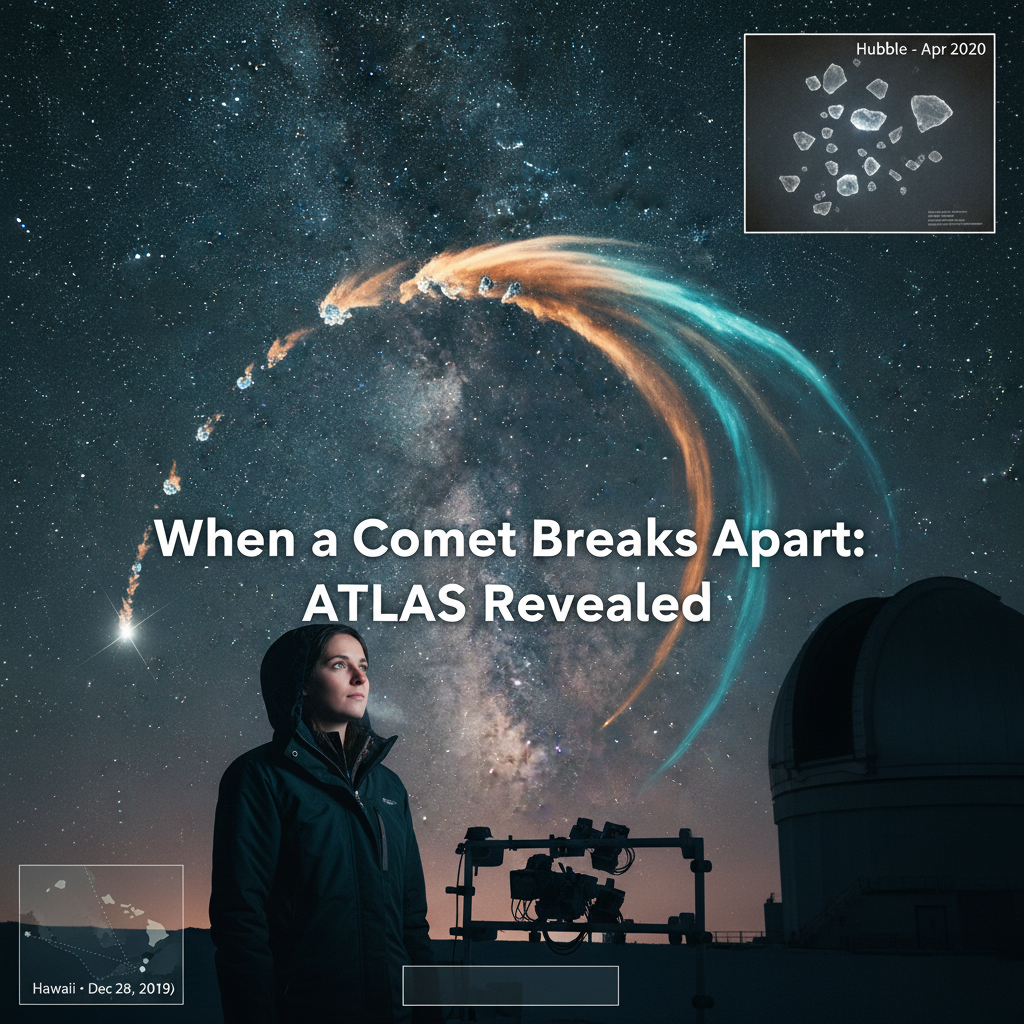
Exploring Comet C/2019 Y4 (ATLAS): A Saga of Discovery and Fragmentation
Comet C/2019 Y4 (ATLAS) is a fascinating celestial object that sparked immense interest in the astronomical community. From its discovery to the unexpected fragmentation, and the scientific insights it offered, Comet ATLAS has been a subject of ongoing study. This article delves into various intriguing aspects of Comet ATLAS and why it matters to us today.
Discovery and Initial Excitement
Discovered on December 28, 2019, by the Asteroid Terrestrial-impact Last Alert System (ATLAS) in Hawaii, Comet C/2019 Y4 was initially a faint object in the constellation of Ursa Major. The excitement was palpable when it brightened significantly, with expectations for it to become a naked-eye marvel. However, nature took a different course.
- Discovering Potential: Initial brightness suggested it could rival Venus in visibility.
- Public Interest: Sparked public and astronomical anticipation for a celestial spectacle.
- Scientific Opportunity: Early observations set the stage for deeper studies of cometary structures.
The Great Fragmentation: A Unique Event
April 2020 marked a turning point as Comet ATLAS began to disintegrate. The NASA/ESA Hubble Space Telescope documented this fragmentation, unexpectedly occurring over 100 million miles from the Sun. This phenomenon provided an unparalleled chance to study cometary compositions.
- Unpredictable Fragmentation: Occurred at an unusual distance from the Sun, diverging from typical comet behavior.
- Fragment Observation: Hubble captured some 30 to 25 fragments between observations.
- Scientific Insight: The breakup offered insights into the structural fragility of comets.
Composition and Its Scientific Significance
Analyzing Comet ATLAS’s fragments revealed valuable information about its composition. The study illuminated the comet’s material makeup and provided a glimpse into the early solar system’s chemistry.
- Dust and Volatiles: Its tail primarily consisted of dust and key volatiles like cyanogen and triatomic carbon.
- Carbonaceous Features: The comet is rich in carbon compounds, although the presence of nickel remains less definitive.
- Impact on Cometary Research: Opened new avenues to understand ancient cometary material and solar system formation.
The Legacy of Comet ATLAS
Despite not dazzling the night sky, Comet ATLAS has left an indelible mark on the field of cometary science. Its fragmentation provided a wealth of data, fostering continued research into the origins and structures of comets.
- In-Depth Analysis: The breakup offered an unexpected view into the comet’s nucleus.
- Cometary Structure: Revealed insights into comet fragility and material composition.
- Scientific Treasure: Its study will enhance understanding of solar wind interactions and comet compositions for future generations.
Conclusion
Comet C/2019 Y4 (ATLAS) may not have become the spectacular celestial object many hoped for, but its unique scientific contributions cannot be overstated. Its unexpected fragmentation has provided a wealth of information, driving deeper inquiry into cometary science and solar system history. Comet ATLAS continues to inspire astronomers and researchers, ensuring its lasting legacy.
TL;DR Table
| Theme | What’s Happening | Why It Matters |
|---|---|---|
| Discovery | Initial brightening raised expectations of a celestial spectacle | Excitement among astronomers and public for potential visibility |
| Fragmentation | Comet disintegrated unexpectedly far from the Sun | Provided unique data on cometary structure and behavior |
| Composition | Revealed insights into dust and volatile makeup | Enriched understanding of solar system’s early chemistry |

For more content, visit reporterfreya.com.
- Tags: Comet C/2019 Y4, ATLAS, Astronomy, Comet Fragmentation, Cometary Science