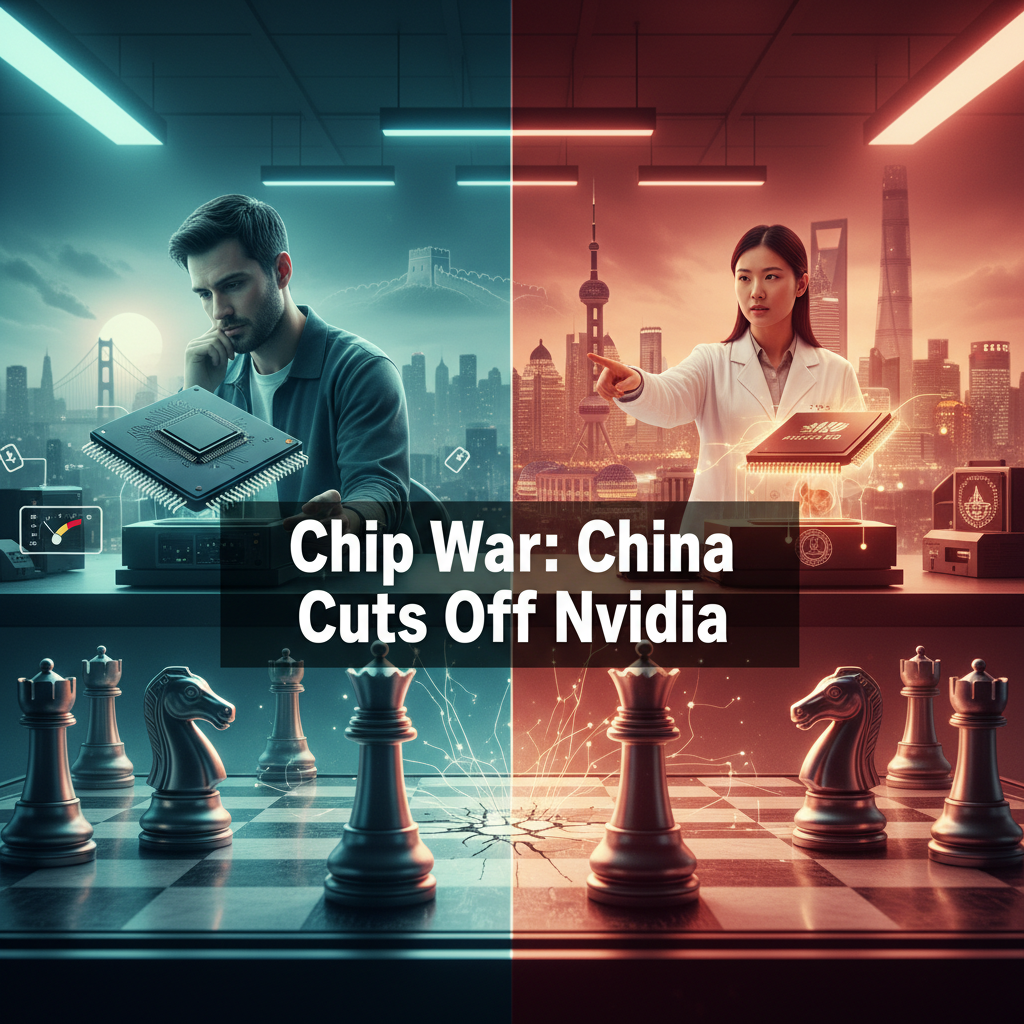
Roles Reversed: China’s Ban on Nvidia’s H20 Chips
The dynamics of the U.S.-China tech war have taken an intriguing turn. While the United States traditionally restricted China’s access to advanced technology, China now bans American Nvidia’s H20 chips. This marks China’s commitment to nurturing its semiconductor industry amid ongoing geopolitical tensions.
The Unraveling of a Strategy: How Nvidia’s “China Solution” Backfired
Nvidia maneuvered through U.S. export restrictions by developing the H20 chip tailored for the Chinese market. This chip aimed to retain Chinese market access while complying with U.S. laws. However, its performance and pricing issues led to its rejection in China:
- Underwhelming Performance: The H20, although compliant with U.S. laws, fails to match its predecessors or Chinese alternatives like Huawei’s Ascend 910B.
- Pricing Concerns: The H20’s unfavorable price-to-performance ratio makes it a difficult choice for Chinese tech companies.
- Impact on Businesses: Chinese tech giants face pressure to adopt domestic alternatives, potentially impacting their competitive edge globally.
China’s “Great Wall of Chips”: The Push for a Domestic Semiconductor Industry
China’s strategic move towards self-sufficiency is evident as it invests heavily in its semiconductor industry. The government’s directive to “buy local” underscores its ambition to create a globally competitive market:
- Technological Self-Reliance: China’s strategy emphasizes reducing reliance on foreign technology, aiming for a robust domestic semiconductor industry.
- Huawei’s Ascend 910B: Emerging as a credible contender, Huawei’s chip gains traction due to government backing and its ecosystem.
- Economic Impact: A successful domestic semiconductor industry could reshape China’s industrial landscape, impacting employment and economic growth.
A Geopolitical Chess Match: Ripple Effects of China’s Decision
The ban on Nvidia’s H20 chips extends beyond market dynamics, reflecting broader geopolitical tensions and potential supply chain disruptions:
- US-China Relations: This decision strains already tense relations, signaling a shift in technological power dynamics.
- Global Semiconductor Supply Chain: China’s push for self-sufficiency may lead to a fragmented tech supply chain with distinct American and Chinese paths.
- Impact on Innovation: A decoupled tech ecosystem could influence the pace of global technological innovation.
The Road Ahead: What’s Next in the Chip War?
The evolving U.S.-China tech rivalry raises critical questions about future policies and technological advancements:
- Future of Export Controls: Will the U.S. impose stricter export rules, further intensifying the chip war?
- Chinese Chipmakers’ Growth: Can China’s efforts in developing world-class chips bridge the technological gap with the U.S.?
- Long-term Consequences: How will consumers and industries adapt to a tech world influenced by geopolitical tensions?
The roles reversed narrative provides a potent lens into the complexities of the tech war between the U.S. and China. With China rejecting American technology to foster its capabilities, the world sees a shift in the power dynamic, posing questions about the future of global technology and innovation.
TL;DR Table
| Theme | What’s Happening | Why It Matters |
|---|---|---|
| Nvidia’s Strategy | Development of H20 chips for China | Chips face rejection due to performance and pricing |
| China’s Domestic Push | “Buy local” policy for semiconductor industry | Strengthens China’s tech independence |
| Geopolitical Impact | Ban affects US-China relations and supply chains | Elevation of technological self-reliance globally |
For more insights, visit Reporter Freya.
Tags: US-China tech war, Nvidia H20 ban, China semiconductor, Huawei Ascend, geopolitical tensions.