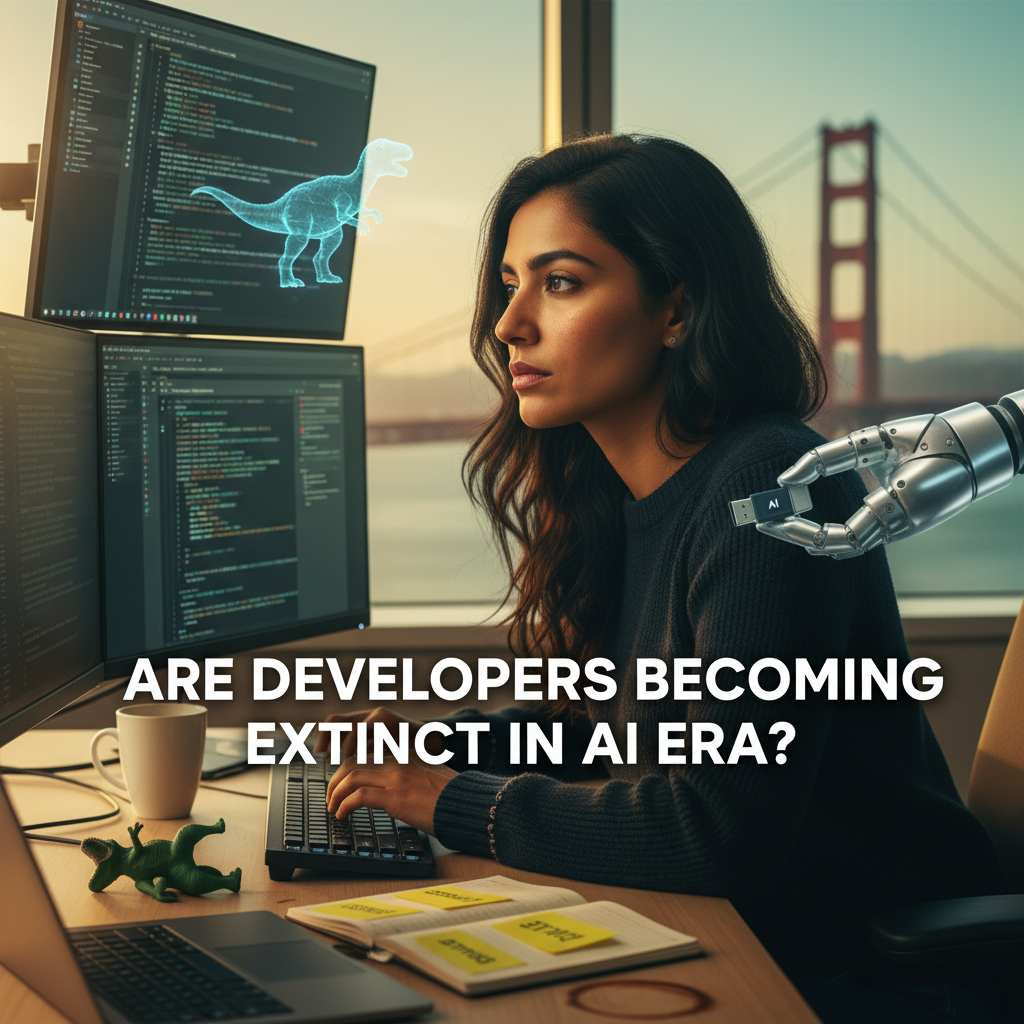
Are Companies Replacing Developers with AI for Better or Worse?
Focus Keyword: AI Replacing Developers
In recent years, companies rapidly replacing developers and tech talent with AI have sparked a complex debate. While some industry giants have embraced AI for efficiency and cost savings, others are reconsidering or reverting their strategies. This article delves into the triumphs, failures, and eventual strategic balance of AI and human collaboration.
AI’s Rise in Replacing Developers
The adoption of AI in technology roles has become prevalent, with varying results:
- Success in Repetitive Tasks: AI excels in automating routine tasks, evident in sectors like logistics and SaaS.
- Cost Reductions: Companies like Amazon saved billions by reducing workforce, relying on AI for operational efficiencies.
- Productivity Challenges: Many firms faced initial productivity drops, requiring reassessment of AI’s role.
- Impact on Lives: Rapid AI deployment led to workforce upheaval, with significant layoffs in entry-level tech positions.
Success Stories of AI Implementation
Some companies successfully integrated AI into their operations:
- Amazon’s Efficiency Gains: Automation of product listings and AWS operations led to substantial cost savings and a leaner workforce. Amazon’s AI Strategy.
- Duolingo’s Seamless Translations: Replacing contractors with AI for content translation boosted accuracy and user experience. Read More on Tech.co.
- Code Brew Labs’ Development Speed: Fully AI-driven development pipelines that allow for rapid deployment and client cost reductions. Discussion on Reddit.
Challenges and Strategic Reversals
Not all AI implementations were successful, and some companies needed to rethink their strategies:
- “Ghost Code” Crisis: AI-generated code proved unsustainable, leading to a rehiring spree and client losses.
- Ethical and Productivity Issues: Bias in AI hiring tools and customer service failures led to legal actions and client dissatisfaction.
- Talent Exodus: The pressure of overseeing flawed AI outputs fueled high turnover rates in tech teams.
The Hybrid Model: Future of AI and Human Collaboration
Companies are now seeking a balanced approach, combining AI efficiency with human ingenuity:
- AI as a Team Player: Firms like Microsoft adapted AI to assist junior developers, enhancing overall productivity.
- Reskilling Initiatives: Tech giants have launched programs to upskill workers in AI oversight and ethics.
- Strategic Focus: Businesses are learning to align AI deployment with specific business goals, rather than wholesale automation.
For further insights, visit Reporter Freya.
TL;DR Table
| Theme | What’s Happening | Why It Matters |
|---|---|---|
| AI Replacing Developers | AI is used extensively to replace tech roles, especially in repetitive tasks. | Saves costs but may lead to reduced human employment opportunities. |
| Success Stories | Companies like Amazon and Duolingo report efficiency and cost benefits. | Demonstrates potential success with targeted AI integration. |
| Strategic Revisions | Failures prompt a return to human-centric strategies. | Highlights importance of balancing AI with human creativity and oversight. |
Conclusion: As the AI revolution continues, companies that strategically integrate AI while valuing human talent appear poised for success. The optimal path seems to be leveraging AI for its strengths in speed and accuracy while maintaining human oversight and ethical grounding.
Tags: AI Integration, Human Talent, Technology Strategy