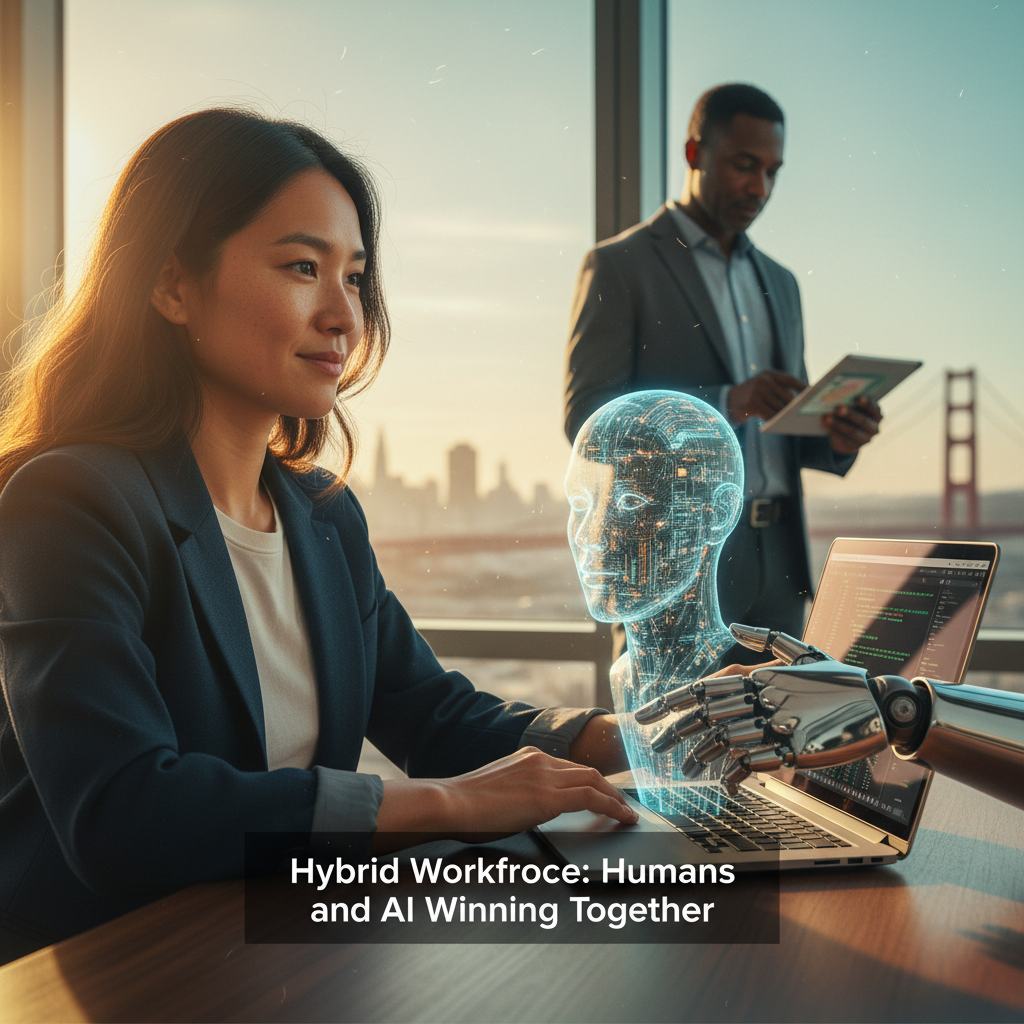
Are Companies Rethinking Their Strategy to Replace Human Talent with AI?
In 2026, the rapid adoption of AI technologies has prompted companies to evaluate the effectiveness of replacing human talent with AI. With varying degrees of success and failure, businesses are reassessing their strategies to better integrate AI while recognizing the invaluable role of human input.

AI Adoption: Successes and Pitfalls
AI adoption in 2026 is a blend of success stories and notable failures. Here’s a look at what’s happening:
- Increased Adoption: 88% of companies use AI, yet only 33% have scaled it successfully across their enterprises.
- Failure Rates: 95% of generative AI pilots fail to deliver ROI, contributing to a productivity paradox.
- Impact on Developers: Developers find themselves making major changes to AI code, leading to a slower workflow and reliance on AI tools.
- Impact on People: Job roles evolve as companies maintain the need for human oversight alongside AI-driven processes.
- McKinsey’s 2025 AI Findings
Case Studies: Hybrid Success vs. Full Replacement Failures
The strategic choice between AI augmentation and replacement has led to varying outcomes for companies:
- Hybrid Implementations: Companies like Google, Microsoft, and NVIDIA leverage AI for augmentation, improving efficiency while retaining human oversight.
- Replacement Failures: Firms like Klarna and various tech startups faced increased issue rates and customer dissatisfaction when replacing human roles with AI.
- Business Impact: Companies experience technical debt and diminished quality when opting for full AI replacements.
- Stanford Study on AI Productivity Paradox
Strategic Shifts in 2026
As AI technology matures, businesses are taking crucial steps to optimize its integration:
- Augmentation Over Replacement: Companies now realize the importance of AI partnering with humans instead of replacing them.
- Development of Orchestration Layers: Leaders like PwC are creating frameworks to balance AI and human tasks efficiently.
- The Hybrid Workforce Model: AI manages repetitive tasks while humans focus on complex problem-solving and innovation.
- Impact on Work Life: The emerging focus on hybrid AI-human roles boosts demand for professionals skilled in AI oversight and orchestration.
- TechFinitive 2026 Analysis
Top Companies Leading the Transition
The following companies are effectively navigating AI integration by harmonizing technology with human talent:
- Microsoft: Utilizes GitHub Copilot as a pair programmer.
- IBM: Employs AI assistants for complex system maintenance.
- Amazon: Combines warehouse robotics with human oversight.
- Adobe: Incorporates AI tools to enhance creative processes.
- Further Reading on Hybrid Workforce
The Future: Reskilling and Hybrid Roles
Looking forward, the evolution of tech talent is clear:
- Demand for Hybrid Developers: Skilled professionals in AI oversight and prompt engineering are increasingly valued.
- Salary Increases: Developers with AI orchestration expertise can earn 35-50% more.
- Creation of New Roles: Positions like AI-Human Workflow Architects and Ethical AI Implementation Specialists are emerging.
Conclusion
In 2026, companies that leverage AI to augment rather than replace human talent are thriving. The most successful strategies integrate AI within existing workflows, ensuring a balance between efficiency and innovation. As AI technology matures, the future is undoubtedly hybrid, with businesses and talent aligned in maximizing AI’s potential while safeguarding human skills.
TL;DR Table
| Theme | What’s Happening | Why It Matters |
|---|---|---|
| AI Adoption | 88% of companies use AI but struggle with scaling. | Highlights the need for effective integration strategies. |
| Strategic Shifts | Focus on AI augmentation rather than replacement. | Ensures better outcomes by preserving human insight. |
| Future of Tech Talent | High demand for hybrid developers and new roles. | Emphasizes the importance of reskilling over replacement. |